
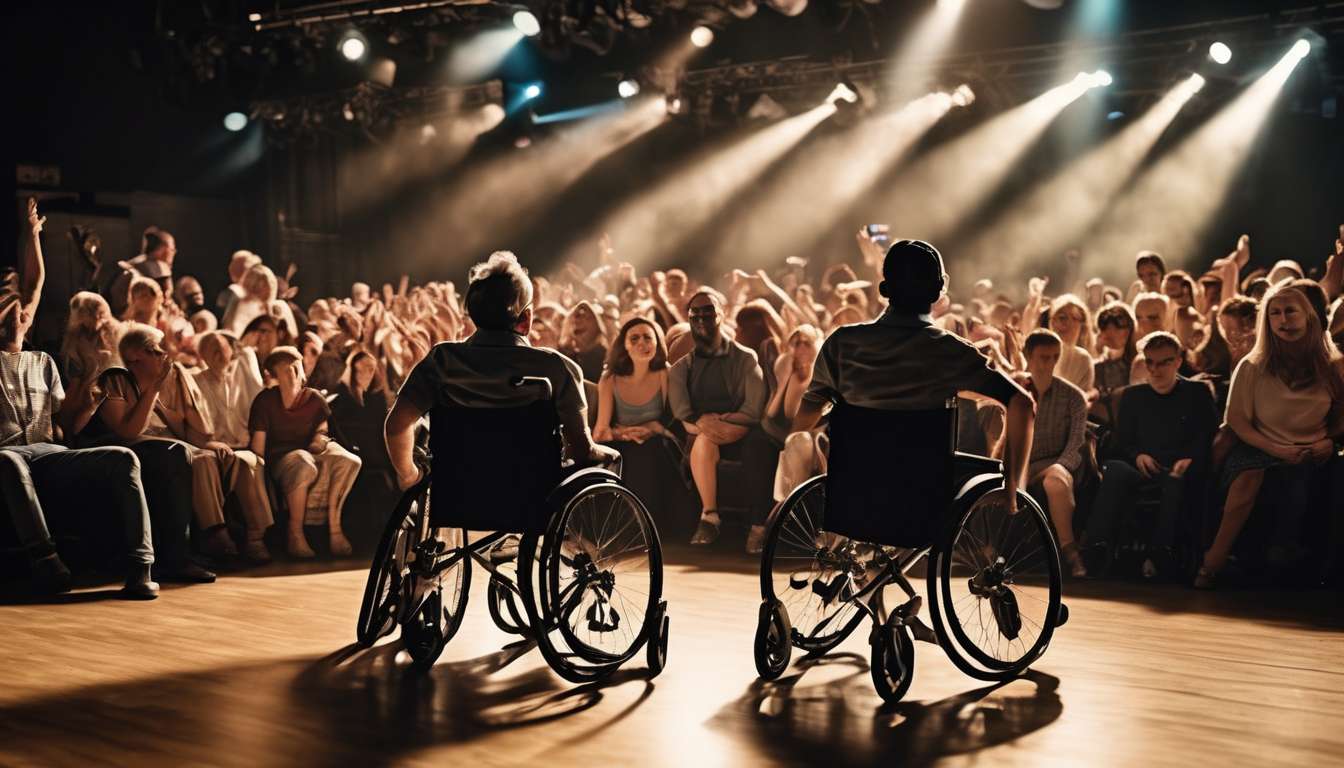
For too long, physical and sensory barriers have kept eager audience members from fully experiencing live dance performances.
We see empty seats where participants with mobility challenges might have sat, hear feedback from patrons who could not access hearing augmentation, and read messages from caregivers seeking clearer accessibility information.
We are changing that by documenting the concrete problems venues face—lack of ramps, inadequate signage, poor sightlines, limited sensory-friendly performances—and presenting practical, scalable solutions.
We believe accessibility is not an optional add-on but a core design principle that enriches artistic expression and broadens community participation.
By collaborating with choreographers, venue managers, disability advocates, and technologists, we explore adaptations that preserve artistic intent while removing barriers:
-
Physical adaptations
- Tiered seating options
- Ramps and improved sightlines
- Tactile guides
-
Sensory and communication supports
- Captioning and hearing augmentation
- Sensory-friendly performance times
- Clear, accessible signage
-
Organizational measures
- Staff training on accessibility and inclusion
- Caregiver-friendly information and policies
- Ongoing collaboration with disability advocates
Our goal is to show how modest investments and thoughtful planning transform spaces into inclusive places where more people can move, feel, and celebrate dance together.
Assessing Venue Barriers
Survey physical, sensory, and communication barriers.
We start by surveying the venue and its surroundings to pinpoint what’s preventing people with disabilities from attending and participating.
Map key physical elements.
- Entrances, routes, and restroom access
- Sightlines and seating areas
- Locations of steps, narrow doorways, and poor lighting that interrupt a welcoming flow
Identify accessible seating and signage needs.
- List areas needing accessible seating (without prescribing exact placement yet)
- Note where tactile or visual signage is missing
Evaluate sensory and acoustic conditions.
- Assess acoustic issues and potential sensory triggers
- Plan appropriate sensory accommodations, such as reduced-stimulation areas or quiet rooms
Review ticketing, websites, and entry procedures.
- Check clarity and availability of alternative formats (e.g., large print, screen-reader compatibility)
- Assess how entry procedures work for people with different access needs
Observe and improve staff interactions.
- Observe how staff handle access requests and emergency communication
- Outline staff disability training to build empathy and practical skills
Document obstacles and create an inclusive action plan.
By documenting concrete obstacles and solutions, we create an inclusive action plan that centers belonging, ensuring people with disabilities can arrive, navigate, and feel acknowledged at every step.
Accessible Seating Strategies
Seating layouts will prioritize equitable sightlines, mobility access, companion spaces, and flexible options.
We arrange accessible seating throughout the venue — front, middle, and rear — so people with mobility devices or limited stamina can choose the best view without feeling isolated.
We reserve adjacent companion seats and clearly mark them during ticketing so friends and family can sit together.
Seating is designed for flexibility and on-the-night adaptability.
- Removable chairs for easy reconfiguration.
- Transfer-friendly spacing to support people who use wheelchairs or need assistance.
- Compact modular units that can be added, removed, or rearranged to respond to varied needs.
Sensory and neurodiversity accommodations are paired with seating choices.
- Low-stimulation zones for quieter, less crowded viewing.
- Clearly signposted, easy exits to reduce anxiety and support quick departures.
- Reduced or adjustable lighting options to minimize sensory overload.
Front-of-house staff are trained in respectful, practical assistance.
- Regular disability-awareness training focused on choice, consent, and dignity.
- Practical guidance on assisting mobility device users, seating transfers, and using companion seating.
- Procedures for communicating sensory options and responding to requests calmly and respectfully.
By combining thoughtful layouts, clear ticketing, sensory supports, and informed staff, we create welcoming, usable spaces where everyone can enjoy live dance together.
Improving Physical Access
We’ll remove barriers to entrances, routes, restrooms, and stage access so people using mobility devices or with limited mobility can navigate the venue independently and safely.
We’ll widen doorways, install ramps and lifts, and keep clear, level pathways from drop-off points to performance spaces.
We’ll designate and signpost accessible seating areas with companion spots close to sightlines and amenities, ensuring everyone shares the experience together.
We’ll make restrooms and backstage areas usable, with grab bars, adjustable counters, and reachable fixtures, plus clear emergency exits and illuminated wayfinding.
We’ll coordinate sensory accommodations where physical changes intersect with visitor comfort, like quiet zones adjacent to accessible spots, without replacing full sensory planning covered elsewhere.
We’ll invest in staff disability training so front-line teams proactively support arrival, seating transitions, and emergency assistance with dignity and independence.
We’ll consult community members with lived experience during planning and evaluation, and we’ll monitor maintenance to keep all features reliable, creating a welcoming, respectful environment where everyone can join the performance.
Enhancing Sensory Supports
We’ll provide multiple sensory supports — like quiet zones, low-sensory showings, adjustable lighting, and clear signage — to help people with sensory sensitivities enjoy performances comfortably.
We design spaces so everyone feels welcome, offering accessible seating near exits and quieter areas so people can move or take breaks without missing the show.
Our sensory accommodations include:
- noise-reduction headphones available at coat check,
- visual guides to sound levels,
- pre-show orientation sessions that set expectations and reduce surprises.
We train front-of-house teams with scenario-based staff disability training so they can recognize needs, offer discreet assistance, and adapt on the spot.
We partner with community members to review practices, ensuring supports reflect lived experience.
By centering choice and dignity, we make attendance predictable and manageable for neurodivergent patrons and others with sensory needs.
These concrete measures build trust and a sense of belonging, so everyone can focus on the performance rather than on navigating barriers.
Communication and Signage
We will use clear, consistent signage and multiple communication methods so patrons with diverse needs can find their way, get information, and request support easily.
Signage and wayfinding:
- We place large-print, high-contrast signs at entrances, restrooms, and accessible seating zones.
- We post maps online and at kiosks.
- Wayfinding includes tactile markers and QR codes linking to audio descriptions and event schedules.
Communication of event changes and sensory options:
- We notify patrons in advance of event changes and sensory-accommodation options via:
- Email.
- Text.
- Social media.
- We offer printed and digital cue sheets at the door.
On-site directions and accommodations:
- Signage indicates quiet rooms, companion seating, and routes free of stairs so everyone feels welcome.
- We coordinate with the box office and volunteers to ensure that requests for accessible seating and sensory accommodations are logged and honored.
Staff visibility and training:
- We share concise information about staff disability training so patrons know who can assist them, while keeping instructions straightforward and visible.
Outcome:
- By making information accessible and predictable, we invite people to attend with confidence and feel that they belong in our space.
Staff Training Practices
We train all front-line staff and volunteers in clear, practical skills.
- Training covers greeting patrons with disabilities, guiding routes, and handling accommodation requests so staff can respond confidently and consistently.
- We build short, repeatable modules that include respectful language, how to describe spaces, and when to offer assistance without assuming.
- Role-play and shadow shifts let people practice seating patrons at accessible locations and coordinating transfers with dignity.
We make sensory accommodations part of onboarding.
- Staff are taught to recognize signs of sensory overload and to offer quiet zones, noise-reducing aids, or alternative entry times.
- Supervisors give quick refreshers before events.
- We collect staff feedback to refine procedures.
We support staff capability and create consistent, welcoming experiences.
- Clear policies, documented checklists, and measurable goals help keep standards high.
- These tools ensure consistent experiences and make accessibility a shared responsibility so patrons feel seen and safe.
Community Partnerships
We partner with local disability organizations, advocacy groups, and service providers to co-design programming, share resources, and broaden outreach to underrepresented attendees.
We build relationships that center lived experience.
- Invite community partners to advise on accessible seating layouts, sensory accommodations, and communication needs.
- Host joint planning sessions and listening circles so people with disabilities shape event design, from ticketing to arrival paths.
We collaborate on public information campaigns that welcome attendees and clearly explain available supports, reducing barriers created by unclear expectations.
We coordinate diverse volunteer networks and staff.
- Recruit volunteers and contracted staff who reflect community diversity.
- Offer co-led workshops that reinforce staff disability training with real-world scenarios.
We pool expertise and funding to create sustainable practices.
- Implement dedicated quiet rooms and priority entry lanes.
- Establish ongoing maintenance and evaluation of accessibility features.
Our partnerships prioritize trust, accountability, and ongoing dialogue so everyone can participate confidently and know they belong at live dance events.
Measuring Impact and Growth
We will track participation, satisfaction, and operational metrics to measure how accessibility changes attendance, retention, and overall attendee experience.
Baseline and ongoing attendance data will be collected on ticket sales, repeat visits, and demographic reach to see who’s coming back when accessible seating and sensory accommodations are in place.
Qualitative feedback through surveys and focus groups will ask about comfort, welcome, and barriers removed.
- We will run short surveys for quick signals.
- We will convene focus groups for deeper insight.
- We will disaggregate results to ensure voices from disability communities inform decisions.
Operational metrics will be monitored to spot friction points, including:
- entry times,
- assistance requests,
- incident reports.
Staff training impact will be evaluated by measuring:
- response quality,
- resolution time,
- reported confidence from both staff and patrons.
Accountability and continuous improvement:
- We’ll set clear targets and share progress publicly.
- We’ll adjust tactics when data shows gaps.
By centering measurable outcomes and community feedback, we will grow participation and belonging at live dance venues in ways that are transparent, accountable, and sustained.
How can live dance venues secure funding or grants specifically for accessibility upgrades beyond general capital campaigns?
Question: How can we secure funding or grants specifically for accessibility upgrades beyond general capital campaigns?
Research targeted funding sources.
- Identify and apply to disability-focused foundations and arts access funds that prioritize accessibility projects.
- Search federal, state, and local government accessibility grants (e.g., ADA-related programs, cultural agency accessibility funds).
- Explore national databases and grant directories to locate less-visible niche funders.
Build community partnerships.
- Partner with local disability organizations and advocacy groups to strengthen applications and demonstrate community buy-in.
- Engage accessibility consultants, service providers, and users with lived experience to validate needs and advise scope.
Pursue diverse revenue streams tied to inclusion.
- Apply for program-specific grants (e.g., inclusive programming, sensory-friendly events) rather than only capital grants.
- Run crowdfunded campaigns targeted specifically at accessibility upgrades, using segmented messaging for donors who care about inclusion.
- Seek corporate sponsorships linked to corporate social responsibility and diversity/inclusion goals.
Craft compelling applications and appeals.
- Use user stories and testimonials from people with disabilities to illustrate real impact.
- Provide clear, line-item budgets and demonstrate long-term sustainability and maintenance plans.
- Include measurable outcomes and evaluation plans (e.g., increased attendance by people with disabilities, accessible program counts).
Practical next steps.
- Compile a prioritized list of foundations, arts funds, and government programs with deadlines and eligibility.
- Convene a planning team including disability advocates to develop budgets and user-story materials.
- Draft tailored grant narratives and a crowdfund/sponsorship pitch.
- Submit applications and follow up with funders; track outcomes and use wins to leverage further support.
Key takeaway: Combine targeted research, community partnerships, diversified funding tactics, and emotionally compelling, well-budgeted proposals to secure funding specifically for accessibility upgrades.
What legal obligations do small, independently owned venues have regarding accessibility, and how do they differ from those of larger, publicly funded theaters?
Small independently owned venues must follow baseline accessibility laws (for example, the ADA). They must provide reasonable accommodations and accessible entry when feasible, though they often receive greater flexibility regarding structural alterations.
Larger, publicly funded theaters face stricter obligations. These venues are typically required to achieve full compliance with building codes, ensure program access, and provide enhanced seating and restroom accessibility.
We will collaborate to interpret and apply obligations locally. Together we can:
- review the specific local, state, and federal requirements that apply;
- identify feasible, cost-effective accessibility improvements;
- prioritize changes that provide the greatest access for the broadest audience; and
- advocate for inclusive, practical solutions with funders, regulators, and community partners.
How can venues make accessibility information—like seating maps, sensory accommodations, and ASL availability—discoverable and easily updatable on third-party ticketing platforms?
Goal: Make venue accessibility information discoverable and easy to update on third‑party ticketing platforms.
Approach: Create clear, standardized accessibility info packets and deliver them via multiple channels.
-
What to include in each packet:
- Seating maps with accessible seating locations and sightlines.
- Sensory notes (sound levels, lighting, typical crowd noise).
- Communication access options (ASL interpreters, captioning, assistive listening).
- Mobility details (entrances, elevators, ramps, restroom access).
- Companion seating and transfer assistance policies.
- Contact information for accessibility inquiries and on‑site staff.
-
Delivery methods:
- Platform APIs — provide structured endpoints (JSON/REST) so ticketing sites can fetch live data.
- CSV uploads — offer downloadable CSV templates for bulk import into ticketing systems.
- Accessible web pages — maintain an up‑to‑date, WCAG‑conformant web page per event and a machine‑readable version (e.g., JSON‑LD) for crawlers.
Single source of truth and update process.
- Maintain one canonical record (e.g., a venue accessibility database) that feeds all outputs (APIs, CSVs, web pages).
- Assign dedicated staff responsible for creating, verifying, and updating accessibility packets.
- Versioning and timestamps — include last‑updated timestamps and version numbers so platforms and guests know the data is current.
Requests to ticketing platforms for better discovery and trust.
- Prominent placement — ask platforms to display accessibility details near seating selection and event descriptions.
- Plain‑language labels — use consistent, nontechnical labels (e.g., “ASL interpretation,” “Low‑sensory entry”) so guests can scan quickly.
- Search and filters — request filters for accessibility features (e.g., “wheelchair accessible,” “companion seating,” “sensory‑friendly”).
- Audit and sync cadence — agree on regular sync intervals (e.g., hourly/daily) and periodic audits to ensure data fidelity.
Operational practices to ensure reliability.
- Train staff on how to document and update accessibility features accurately.
- Run regular audits comparing the canonical record against live platform displays.
- Collect guest feedback after events to correct omissions and improve descriptions.
- Escalation path — define how urgent changes (e.g., elevator outage) are propagated immediately to partners.
Outcome: With standardized packets, a single source of truth, dedicated upkeep, and platform partnerships for prominent, plain‑language display and regular audits, guests will be able to reliably find and trust the accessibility information they need.
Conclusion
You’ve seen how reducing barriers, rethinking seating, and improving physical access can open live dance venues to more people.
By adding sensory supports, clearer signage, and accessible communication, you’ll make performances welcoming for diverse audiences.
Training staff and partnering with community groups will sustain these changes and build trust.
Track attendance and feedback to measure impact, then keep iterating.
With intentional choices, your venue can grow inclusively and create richer experiences for everyone.