
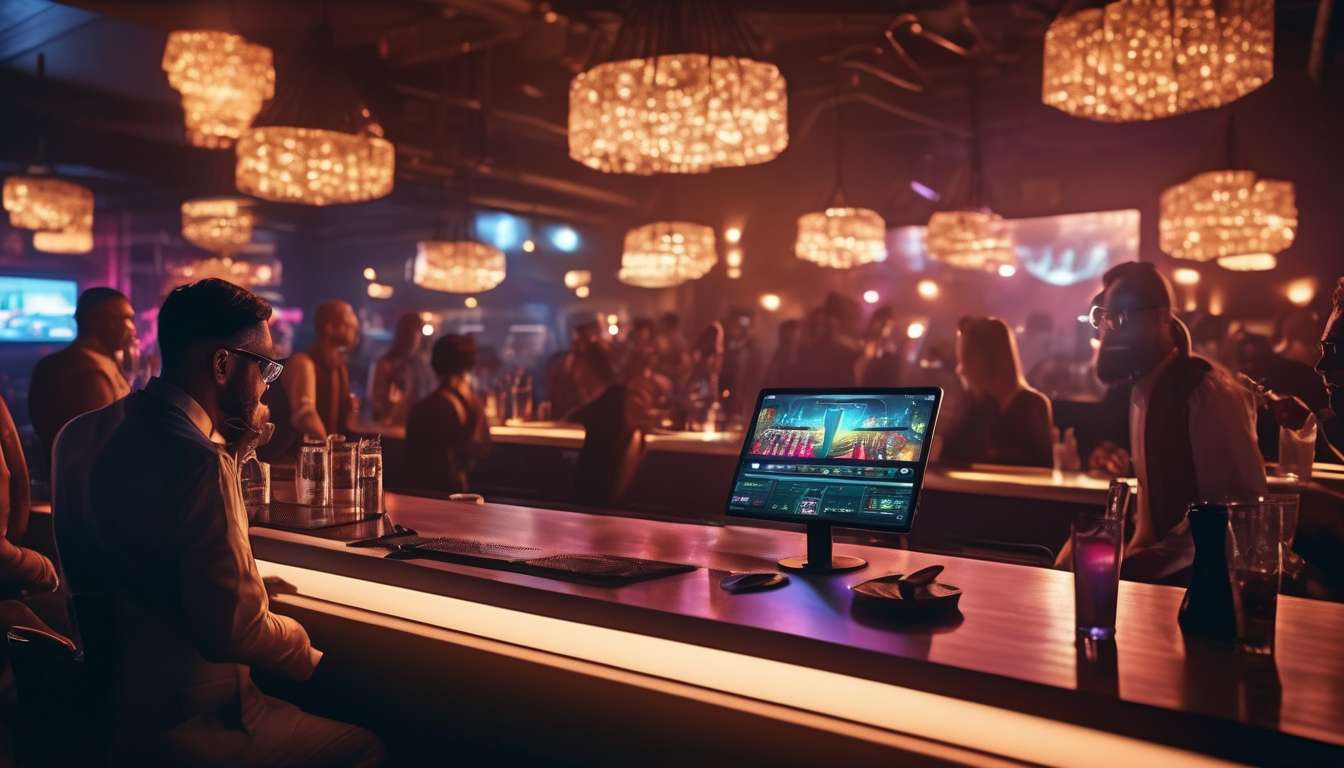
Problem statement: long lines, ticketing errors, and inconsistent sound quality are forcing a rethink of how live entertainment clubs operate.
We recognize patrons expect seamless experiences from arrival onward. At the same time, clubs face tight margins, staffing shortages, and unpredictable demand.
Integrated technologies being adopted:
- Cloud-based ticketing to reduce errors and speed entry.
- AI-driven scheduling to match staff to demand and cut labor costs.
- Cashless payments to speed transactions and increase per-customer spend.
- Smart acoustics to ensure consistent sound quality and reduce show disruptions.
Why these investments matter:
- They streamline back-of-house operations.
- They reshape guest engagement and improve the front-of-house experience.
- They free staff to focus on hospitality rather than routine tasks.
- They generate data that guides programming, pricing, and inventory decisions.
Trade-offs operators must consider:
- Upfront costs versus long-term efficiency gains.
- Training and change management versus faster, more reliable service.
- Data/privacy responsibilities versus actionable business insights.
- Vendor selection and integration complexity versus the benefits of a unified platform.
What this article examines:
- Concrete implementations of the technologies listed above.
- Real-world outcomes and metrics operators have reported.
- Strategic choices clubs make when modernizing operations.
Conclusion: focus on problems first.
By starting with operational pain points, clubs can select targeted technologies that transform perennial challenges into competitive advantages—improving efficiency, increasing loyalty, and growing revenue for venues of all sizes.
Operational Pain Points
Problem summary
We struggle with slow ticketing, inconsistent sound and lighting control, and inefficient staff coordination — all of which eat into revenue and guest experience.
Pain points
- Long lines frustrate regulars and newcomers alike.
- Out-of-sync cues undermine the vibe we work so hard to create.
- Manual workarounds and unclear communication channels increase downtime and errors.
What we need (high-level requirements)
- Cashless payments that speed transactions and reduce theft.
- AI staffing tools that predict busy shifts and free managers to focus on hospitality.
- Cloud ticketing that centralizes sales and access without hiccups.
- Tech that respects our club’s personality and helps everyone belong — staff, artists, and patrons.
Desired outcomes
- Shorter wait times and smoother entry flow.
- Fewer manual processes and clearer communication channels.
- Measurable gains in uptime and throughput to reclaim lost revenue.
- Consistent sound and lighting cues that preserve the experience and vibe.
Next-step principles for selecting solutions
- Prioritize systems that integrate (payments, ticketing, and staff scheduling) to reduce duplicate work.
- Choose tools with reliable offline modes or failover for critical services.
- Favor solutions with analytics to measure throughput, revenue, and staffing effectiveness.
- Ensure configurable UX so the club’s personality is preserved and staff adoption is easy.
By embracing practical, integrated tools, we’ll make operations seamless and concentrate on what we love: shared live experiences.
Cloud Ticketing Adoption
We’ll move ticket sales and access control to a centralized, cloud-based system that reduces downtime, simplifies scaling for big nights, and gives us real-time visibility into inventory and attendance.
As a team, we’ll adopt cloud ticketing to unite front‑of‑house, marketing, and security so everyone feels connected to the same live data. We want a setup that supports cashless payments at entry, speeds throughput, and cuts queues so patrons feel welcome from the moment they arrive.
By standardizing on one cloud platform, we’ll share dashboards, segment audiences, and manage holds without juggling spreadsheets or uncertain counts.
- Integrations with existing POS and back‑office tools mean fewer manual handoffs and clearer accountability.
- Shared views strengthen our community — staff and regulars alike — because we’re all operating from the same facts.
We’ll pick a vendor with robust uptime, granular access roles, and transparent reporting so we can scale events confidently and keep our focus on delivering memorable, inclusive nights for everyone.
AI Staffing Optimization
AI-driven forecasting and scheduling will match staff levels to real-time demand.
By reducing overtime and ensuring every shift has the right mix of talent, we improve operational efficiency and service quality.
Personalized scheduling that respects life outside work.
- AI tools learn individual strengths, preferred roles, and availability.
- Schedules are generated to reflect those preferences and capabilities, helping each team member feel seen and supported.
Cross-data prediction of busy nights.
- We link patterns from cloud ticketing sales, social media buzz, and historical attendance.
- This lets us predict demand and scale teams proactively, resulting in fewer last-minute calls, fairer shift distribution, and clearer expectations.
Integration with operational systems for smoother execution.
- Forecasts feed into setup, backstage coordination, and security staffing.
- Streamlined workflows reinforce trust and coordination across departments.
Human-centered approach: AI augments, not replaces, judgment.
- Managers are trained to interpret recommendations and provide feedback to improve models.
- Staff remain involved in continuous refinement so the club operates smarter while the crew stays connected and valued.
Cashless Transaction Systems
We’re moving to fully digital transaction systems that speed service, reduce theft, and give us real-time sales visibility.
We’ve adopted cashless payments across bars and merch stands so everyone in our community gets faster lines and safer nights.
By linking payments to wristbands or mobile wallets, we cut down on errors and shrink the window for theft, which helps staff feel supported and guests feel secure.
We integrate these systems with cloud ticketing platforms so entry, upgrades, and purchases flow into one dashboard.
That unified view helps us make fair, timely decisions together and keeps shift changes smooth.
We also coordinate with AI staffing tools to match team levels to demand based on live sales data, which means fewer surprises and better shifts for our crew.
Our approach centers on belonging: staff and fans share ownership of a seamless experience built on transparency, reliable payouts, and predictable service.
We’ll keep refining integrations so the club stays welcoming, efficient, and resilient.
Smart Acoustic Solutions
We’re investing in smart acoustic solutions that adapt sound levels and EQ in real time so every show sounds great and neighbors stay happy.
Networked sensors and beamforming arrays let us tune coverage for intimate sets and full-band nights, reducing hotspots and complaints without sacrificing warmth.
Integrated control panels link with cashless payments, cloud ticketing, and AI staffing dashboards so our team can focus on hospitality, not fiddling with knobs mid-show.
Automated presets recall room profiles for different configurations, shortening setup time and making volunteers and new hires feel confident fast.
Remote monitoring gives us peace of mind: we can support venues across the circuit, maintain consistent quality, and respond to issues before they disrupt community gatherings.
By treating sound as part of the guest experience and the team workflow, we reinforce belonging while protecting neighborhood relationships and ensuring every performance feels like it was made for us all.
Data-Driven Programming
We analyze attendance, sales, and streaming data to shape lineups and schedules that match our community’s tastes and boost turnout.
We use insights from cloud ticketing and point-of-sale trends to decide peak nights, set lengths, and which emerging artists to support — prioritizing acts that resonate with our crowd.
Real-time dashboards show us when people arrive, what drinks move fastest, and which acts keep the room engaged, so we can program with confidence rather than guesswork.
We integrate behavioral signals from cashless payments to refine offers and loyalty perks that make regulars feel seen.
Predictive models and AI staffing suggestions help balance risk and opportunity by:
- Forecasting demand for specific nights and shows.
- Recommending roster sizes to match expected demand and keep service smooth without overstaffing.
We prioritize transparency with local artists and patrons by sharing why decisions are made and inviting feedback.
This collaborative approach helps everyone feel part of the venue’s evolution while improving attendance, revenue, and the sense of belonging we all value.
Integration and Vendor Choices
When choosing technology partners, we prioritize seamless integration, reliable support, and flexible contracts that let us swap vendors as our needs evolve.
We want systems that feel like part of our team. That means we pick vendors who:
- listen and respond quickly,
- share our commitment to the club community, and
- reduce operational friction for staff and patrons.
We prefer cashless payments platforms that connect to our POS and loyalty programs without custom work, reducing friction for staff and patrons alike.
For ticketing and access, we favor cloud ticketing providers with clear APIs and strong uptime guarantees so teams can collaborate confidently across locations.
We evaluate partners on data portability and exit provisions, because belonging means owning our operational choices.
As we explore AI staffing tools to optimize schedules and automate routine queries, we insist on transparency about algorithms and human oversight to protect gig workers and preserve trust.
By setting integration standards, negotiating service-level commitments, and choosing vendors aligned with our values, we build resilient, inclusive operations that everyone — staff and audience — can rely on.
Measuring ROI and Outcomes
We’ll measure ROI by tracking specific metrics—revenue per show, labor efficiency, ticket conversion rates, and customer lifetime value—so we can tie each technology investment to clear business outcomes.
We’ll set baseline measurements before deploying each technology (cashless payments, AI staffing, cloud ticketing), then compare weekly and monthly results.
That way everyone on our team sees measurable change and feels ownership of improvements.
We’ll attribute gains to the appropriate technology:
- Cashless payments — faster lines and higher per-cap spend.
- AI staffing — optimized shift schedules and reduced overtime.
- Cloud ticketing — fewer abandoned carts and improved secondary sales.
We’ll monitor both leading and lagging indicators:
- Leading indicators: dwell time, repeat visits.
- Lagging indicators: profit margin, retention.
We’ll share dashboards with staff and stakeholders so questions are welcomed and insights spread.
If a tech doesn’t deliver, we’ll iterate or reallocate funds.
By keeping metrics transparent and involving the whole crew, we’ll prove value together and strengthen our club’s financial and cultural health.
How will these technology investments affect ticket prices or additional fees for patrons?
How will these changes affect ticket prices or extra fees for patrons?
We’ll aim to balance costs and value so our community feels included. We will avoid sudden price spikes by spreading necessary expenses over time and seeking efficiencies that limit pass-through charges.
We’ll offer tiered options and discounts for regulars.
- Tiered pricing will provide choices for different budgets and preferences.
- Discounts and loyalty benefits will help frequent attendees maintain affordability.
We’ll provide transparent fee breakdowns. Everyone will see exactly what they’re paying for, reducing surprises and building trust.
We’ll revisit pricing with member feedback to keep access affordable. Ongoing consultation will allow adjustments based on community input and changing costs.
What are the cybersecurity and data privacy risks associated with adopting cloud ticketing and cashless systems, and how will clubs mitigate them?
Problem statement — exposure of customer data and operations
Cloud ticketing and cashless systems can expose customer data and operational processes to breaches, fraud, and regulatory compliance gaps when controls are weak or inconsistent. Common risks include unauthorized access, intercepted data in transit, compromised stored data, vendor-side vulnerabilities, insufficient monitoring, and slow or inadequate incident response.
Mitigation strategy — technical controls
-
Encrypt data in transit and at rest.
- Use TLS for all network communications and strong, industry-standard encryption (e.g., AES-256) for stored data.
- Manage keys securely (HSMs or cloud KMS) and rotate them regularly.
-
Enforce strict access controls and multi‑factor authentication (MFA).
- Implement least-privilege role-based access control (RBAC) and just-in-time access where practical.
- Require MFA for all administrative and remote access.
-
Vendor risk management and compliance vetting.
- Vet vendors for SOC 2, ISO 27001, GDPR (for EU data), and other relevant certifications.
- Require contractual security, data processing addenda, and right-to-audit clauses.
Mitigation strategy — detection, response, and governance
-
Log and monitor activity.
- Centralize logs (SIEM) for authentication, transactions, and configuration changes.
- Define alerts for anomalous behavior, suspicious access patterns, and high-risk transactions.
-
Incident response and breach notification readiness.
- Maintain an incident response plan with clear roles, playbooks, and regular tabletop exercises.
- Predefine breach notification procedures to meet legal and contractual timelines.
-
Staff training and privacy communication.
- Provide regular security and privacy training for employees, focusing on phishing, social engineering, and secure handling of payment/customer data.
- Communicate privacy practices clearly to customers to build trust (privacy notices, data retention policies, opt-ins/opt-outs).
Operational and continuous-improvement practices
-
Regular security assessments and penetration testing.
- Conduct periodic internal and external audits, vulnerability scans, and red-team exercises.
-
Segmentation and tokenization for payment data.
- Use network and data segmentation and tokenization/PAN truncation to minimize exposure of payment card data; align with PCI DSS requirements.
-
Continuous compliance and policy updates.
- Keep policies, controls, and vendor contracts updated as regulations and threat landscapes evolve.
Outcome
These measures together reduce attack surface, limit damage if a breach occurs, improve detection and response time, and demonstrate compliance and accountability — protecting customers, operations, and the organization’s reputation.
Will staff roles or staffing levels change in ways that could require union negotiations or new labor agreements?
Question: Will staff roles or staffing levels change enough to require union discussions or new labor agreements?
Answer: We will evaluate impacts carefully and act proactively to minimize disruption.
Key commitments:
-
Transparency and early involvement
-
We will prioritize transparency with staff and their representatives from the outset.
-
We will involve employees and union reps early in planning and decision-making.
-
-
Design principle: augment, not replace
- Role changes will be designed to augment staff capabilities rather than replace people wherever feasible.
-
Retraining and voluntary transitions
-
We will retrain team members to use new systems and take on evolving responsibilities.
-
We will offer voluntary transition options for staff who prefer different roles.
-
-
Fair severance when necessary
- If reductions are unavoidable, we will offer fair severance packages and supports for affected employees.
-
Good‑faith negotiation with unions
-
We will negotiate in good faith with unions to address job security, equitable pay, and collective input into implementation.
-
If changes reach the threshold that requires bargaining or new agreements, we will engage promptly and constructively.
-
If you want, I can draft a short template notice to staff and unions announcing this approach and proposing next steps.
Conclusion
You’re modernizing live-club operations by adopting cloud ticketing, cashless payments, AI staffing, and smart acoustics — and it’s paying off.
With integrated vendors and data-driven programming, you’ll reduce friction, boost revenue, and improve guest experience.
Measure outcomes with clear KPIs and ROI benchmarks so you can iterate fast.
Keep choosing interoperable solutions that scale with your venue, and you’ll create smoother operations, better shows, and a more profitable, resilient business.