
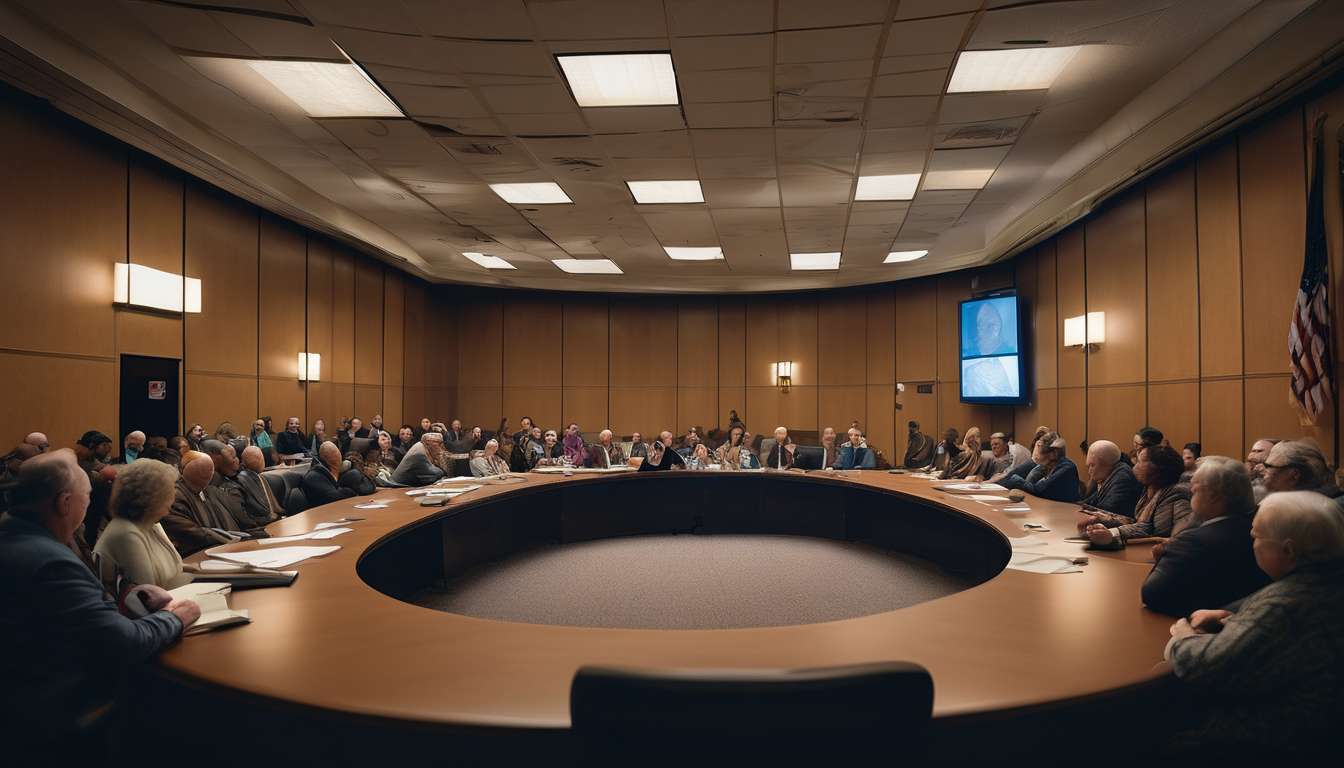
Gathered around a wobbling folding table at the community centre, we listened as a dancer described how new lighting rules would change her stage presence and income.
We had come expecting technical jargon about permits and occupancy limits, but the room quickly filled with stories—owners worrying about compliance costs, neighbours anxious about safety and noise, advocates pressing for labour protections.
As regulators moved through a stack of written submissions, we realized these consultations were not mere formalities; they were the forum where lived experience met policy drafting.
Together we debated language that would determine who could work where and under what conditions, and we watched compromise and conflict reshape proposed regulations in real time.
This article follows that process: how public consultations around regulated exotic dance venues center diverse voices, reveal competing priorities, and ultimately shape policy outcomes that affect communities, workers, businesses, and urban life.
Consultation Overview
Purpose
We are convening public consultations to develop a balanced approach to regulating exotic dance venues that protects performers, respects worker rights, and preserves community safety.
Primary goals
- Gather lived experience from performers, residents, venue operators, and advocates to inform practical policy choices.
- Identify regulatory gaps in existing licensing, workplace protections, zoning, and harm-reduction practices.
- Develop pragmatic standards that protect performers and neighbors while enabling safe, lawful operations.
Scope
- Topics included: licensing, workplace protections (pay, schedules, safety protocols), harm-reduction measures (violence prevention, health supports), and local zoning impacts.
- Topics excluded from this stage: individual policy positions will not be decided here; instead, such positions will be collected and considered through the consultation process.
Who should participate
- Residents and neighborhood groups.
- Performers and performer collectives.
- Venue owners and operators.
- Labor, public-health, and safety advocates and experts.
- Other community stakeholders.
Schedule
- Five regional town halls (in-person) to collect broad community input.
- A four-week virtual comment period following the town halls for written submissions.
- Targeted workshops with labor, safety, and public-health experts to develop technical recommendations.
- A final synthesis meeting to present draft recommendations and invite feedback before finalization.
Accessibility and supports
- Accessible materials (plain-language summaries and large-print versions).
- Translation and interpretation services to accommodate non-English speakers.
- Childcare stipends to reduce participation barriers.
- Multiple participation formats (in-person, livestream, recorded sessions, written submissions).
Transparency and follow-up
- Published timelines and clear contact points so participants know how input will be used.
- Commitment to report back: summaries of input and how it influenced draft recommendations will be shared publicly.
If you’d like, I can draft a public notice or flyer with these details, or produce a timeline graphic and RSVP/contact template for distribution.
Stakeholder Perspectives
Summary of stakeholder perspectives
Performers: They push for recognition of worker rights, predictable schedules, and respect for bodily autonomy. They want regulated striptease spaces that reduce harassment without criminalizing or over-policing consent.
Residents: They emphasize community safety, quiet, and predictable hours. They’re anxious about neighborhood impacts but prefer respectful dialogue over exclusionary measures.
Venue operators: They focus on viable business models, clear licensing, and liability protections. They argue that consistent rules for regulated striptease reduce uncertainty and help operations.
Advocates: Both performer and neighborhood advocates act as bridges, urging policies that protect worker rights while bolstering community safety.
Areas of alignment
- Everyone favors transparency about operations and rules.
- Everyone supports conflict-resolution mechanisms.
- Everyone wants fair, consistent enforcement rather than arbitrary action.
Key tensions
-
Surveillance vs. privacy
- Performers and advocates worry that surveillance (cams, extensive recording) undermines privacy and bodily autonomy.
- Residents and some operators may support surveillance for safety and accountability.
-
Zoning and location
- Residents often push for buffer zones and limits on locations to protect neighborhood character.
- Operators and performers argue overly restrictive zoning can push work underground and increase harm.
-
Enforcement methods
- Performers prefer worker-centered, restorative approaches to incidents.
- Authorities or residents may favor punitive enforcement, licensing suspensions, or criminal measures.
A constructive path forward
Center mutual respect and shared responsibilities: craft policies that acknowledge differing needs and prioritize:
- Clear, predictable rules that reduce uncertainty for operators and performers.
- Worker protections (anti-harassment, hours/scheduling, accessible complaint processes).
- Community safety measures that minimize neighborhood disruptions without excluding or stigmatizing performers.
- Fair enforcement emphasizing transparency, independent oversight, and restorative options when appropriate.
By emphasizing dialogue, shared obligations, and accountability, it’s possible to build a sense of belonging and safety for performers, residents, operators, and advocates alike.
Regulatory Proposals
We propose a set of balanced regulatory options that protect performers’ autonomy, ensure neighborhood livability, and give operators clear, enforceable standards.
Center policy on consent, contracts, and grievance processes.
- Regulated striptease policies should emphasize consent as a foundational principle.
- Require transparent contracts so performers clearly understand work terms, pay, and rights.
- Provide accessible grievance processes that let performers report issues and obtain remedies.
Set venue standards to preserve community safety and shared space.
- Require clear signage outlining behaviour standards for patrons.
- Tailor hours of operation to local rhythms to reduce disturbance.
- Implement noise mitigation measures (soundproofing, operational limits) to protect neighborhood livability.
Prioritize worker rights, health, and safety.
- Mandate health and safety training for performers and staff.
- Include non-retaliation clauses protecting workers who report violations.
- Establish pathways to report exploitation anonymously and safely.
Implement operational measures to protect patrons, neighbors, and staff.
- Require ID-verified entry to reduce illegal activity.
- Set lighting and sightline standards for safe movement and visibility.
- Provide staff training in de-escalation and conflict management.
Create shared oversight and accountability structures.
- Form joint oversight committees composed of performers, operators, and residents.
- Task committees to review incidents, monitor compliance, and recommend adjustments to policies.
- Ensure committees have clear procedures and regular reporting requirements.
Outcome: inclusive, respectful, and accountable venues.
- These proposals aim to create an environment where workers, business owners, and neighbors feel they belong, are protected, and can contribute to safe, accountable regulated striptease venues.
Economic Impacts
We’ll assess how proposed regulations affect local economies, including jobs, business revenues, tax receipts, and nearby property values.
We examine how a shift toward regulated striptease venues can stabilize incomes for performers and staff by formalizing contracts, benefits, and clearer pathways for worker rights.
- Formal contracts and benefits provide predictable earnings and protect against arbitrary dismissals.
- Clearer worker-rights pathways improve access to dispute resolution and collective bargaining.
That predictability often helps businesses plan payroll and investment, supporting local suppliers and service providers.
We also consider possible short-term costs for owners adapting facilities or administrative processes; some smaller venues might consolidate, changing employment patterns.
- Adaptation costs may include facility upgrades, licensing fees, and administrative systems.
- Consolidation effects can lead to fewer but larger venues, shifting or reducing frontline jobs in the short term.
We model tax-revenue scenarios under different compliance rates, noting that higher formalization usually boosts municipal receipts and enables reinvestment in shared services.
- High compliance scenario: increased payroll and sales taxes, more stable municipal income.
- Low compliance scenario: continued informal activity, limited tax gains.
We’re attentive to how property values and neighborhood vitality respond: consistent, well-managed venues tend to create steady foot traffic that benefits nearby shops and restaurants, reinforcing community ties.
Throughout, we center residents and workers who want inclusion and stability, weighing economic trade-offs so policy recommendations support livelihoods, accountability, and community safety.
Safety and Compliance
We’ll evaluate how proposed rules will reduce risks, ensure consistent enforcement, and make venues safer for performers, staff, and patrons.
We’re committed to practical measures that build trust among everyone who belongs to this community.
Clear licensing standards for a regulated striptease sector will set baseline physical conditions — lighting, exits, and surveillance policies — so hazards are minimized and expectations are shared.
We’ll advocate routines for regular inspections and transparent penalties that remove arbitrary enforcement and protect collective dignity.
We’ll support policies that integrate worker rights into safety frameworks without preempting detailed labor debates.
- Confidential reporting channels
- Anti-retaliation safeguards
- Mandatory incident logs
These measures help people feel supported.
We’ll promote training for staff and security on de-escalation and consent, along with community safety partnerships between venues and local services.
By centering respect, predictable rules, and mutual accountability, we’ll create safer spaces where performers, staff, and patrons can participate with confidence and belonging.
Labour Rights Debate
Goal: Integrate labor protections into regulations for regulated striptease while preserving performers’ autonomy and safety.
Principles to center
- Dignity, choice, and mutual support — Regulations should protect livelihoods, reduce harm, and keep venues accountable to the community without criminalizing or marginalizing workers.
- Worker-centered approach — Policies must be co-designed with performers and prioritize their rights, safety, and sense of belonging.
Core standards to require
- Transparent pay practices
- Clear written wage policies (base pay, tips, commissions, house fees).
- Publicly posted wage and tip-distribution rules accessible to performers.
- Predictable scheduling
- Advance posting of schedules with reasonable notice periods.
- Right to request shift changes or limit back-to-back shifts without penalty.
- Accessible grievance procedures
- Confidential, timely complaint processes for workplace issues (harassment, pay disputes, safety).
- Independent avenues for appeal and external oversight.
- Employment classification tied to actual work conditions
- Options for independent contractor or employee status determined by real factors (control over work, schedule, compensation mechanisms), not by labels imposed by management.
- Clear pathways for reclassification if conditions change.
Support for collective bargaining and solidarity
- Enable collective negotiation — Policies should affirm dancers’ rights to organize and bargain collectively over fees, shifts, safety protocols, and workplace rules.
- Protect against retaliation — Explicit anti-retaliation clauses for participation in organizing or grievance processes.
- Facilitate collective tools — Support shared funds, commons, or associations for mutual aid, legal help, and contract negotiation.
Voluntary, trauma-informed training and resources
- Co-design training with performers so it remains voluntary and respects autonomy.
- Include trauma-informed practices, de-escalation, consent communication, and safety planning.
- Provide accessible resources (mental health, legal, financial counseling) without making access a licensing or employment prerequisite.
Licensing and inspections that prioritize worker rights
- Center worker safety and rights in licensing criteria and inspections, not just community decorum.
- Use supportive, corrective approaches rather than punitive sanctions that could push workers into precarious or underground work.
- Require licensees to demonstrate compliance with labor standards and accessible complaint mechanisms.
Outcomes sought
- Stronger worker protections without eroding performer autonomy.
- Increased solidarity and reduced isolation through collective mechanisms.
- Safer, more stable venues that are accountable to performers, staff, and patrons.
- Policies that reduce harm and sustain regulated striptease as part of a healthy shared community.
If you’d like, I can turn these principles into draft regulatory language, an inspection checklist, or sample contract clauses for scheduling, pay transparency, and grievance procedures. Which would be most useful?
Community Concerns
We will address nearby residents’ and businesses’ concerns about noise, litter, and public behavior while avoiding policies that stigmatize performers or push venues underground.
We prioritize listening and shared solutions so community safety is balanced with respect for a regulated striptease industry. This means seeking responses that reduce harm without criminalizing patrons or workers.
Key community requests we’ve heard
- Better waste management (regular litter pickup, waste bins, and cleanup plans).
- Clearer operating hours to reduce late-night disturbance.
- Responsible transport plans that minimize neighborhood disruption without excluding patrons or workers.
Zoning and licensing approach
- Include enforceable standards for noise insulation, litter control, and crowd management.
- Require venues to implement and document compliance measures (e.g., soundproofing, waste contracts, transport coordination).
- Avoid punitive measures that target workers or patrons; focus on venue-level accountability.
Training, complaints, and dispute resolution
- Mandate training for staff on worker rights, de-escalation, and crowd safety.
- Establish clear, accessible complaint procedures and contact points for residents and businesses.
- Prioritize mediation and community-based resolution before enforcement escalates.
Community engagement and accountability
- Promote regular forums where residents, business owners, and venue staff co-create expectations.
- Use those forums to share data, report progress, and adjust standards collaboratively.
- Ensure transparent reporting so everyone can see outcomes and hold parties accountable.
Outcome we seek: mutual respect, dignity, and shared responsibility—neighborhoods and venues coexisting safely and sustainably without stigmatizing or criminalizing people.
Policy Outcomes
How we’ll measure policy outcomes
Shared indicators
- We’ll track reductions in neighborhood complaints.
- We’ll document compliance with noise and waste standards.
- We’ll monitor improved dispute-resolution metrics.
Goal: ensure regulations protect residents without harming performers or pushing venues underground.
Regulatory compliance monitoring
- Report on how regulated striptease venues meet licensing conditions.
- Track adherence to zoning limits and operating hours.
Goal: make neighborhoods feel respected and vibrant.
Worker protections
- Conduct regular audits.
- Maintain confidential feedback channels.
- Provide access to legal and health services.
Goal: ensure performers are safe, paid fairly, and heard.
Community safety evaluation
- Compile incident reports and response times.
- Track participation in prevention training.
- Compare data before and after policy changes to measure real impact.
Transparency and community engagement
- Publish concise, community-focused dashboards.
- Host quarterly forums where residents and workers review results together.
Principles guiding measurement
- Center transparency, mutual respect, and measurable benchmarks.
- Build trust and belonging by keeping enforcement proportional.
- Be adaptive to lived experience and adjust based on evidence.
How will data collected during consultations be stored, who will have access, and for how long will it be retained?
We store consultation data on secure, encrypted servers managed by our team and vetted partners.
We limit access to authorized staff and contracted analysts who need it to summarize findings, and we log all access.
We keep personal identifiers only as long as necessary for verification or legal requirements; afterwards we anonymize or delete them.
We retain aggregated, non-identifiable summaries indefinitely to inform future work and community planning.
What specific avenues exist for anonymous submissions or whistleblowing by current performers and staff who fear retaliation?
We want people to speak up safely and without fear.
Anonymous reporting options:
- We’ll offer anonymous online forms.
- We’ll provide encrypted email dropboxes.
- We’ll use secure survey platforms that strip identifying information.
Third‑party and 24/7 support:
- We’ll contract third‑party hotlines staffed 24/7 to receive reports.
- We’ll accept mailed submissions sent without return addresses.
Confidential in‑person reporting:
- We’ll allow confidential in‑person reporting through partner advocacy groups.
Protections and follow‑through:
- We’ll promise nonretaliation policies.
- We’ll provide clear escalation paths.
- We’ll offer legal referral support.
Overall commitment:
We will combine these channels and protections so everyone feels protected and heard.
Are there plans to monitor and evaluate the long-term social and cultural effects of the regulations, and will those evaluation reports be publicly released?
Are there plans to monitor and evaluate long-term social and cultural impacts, and will reports be public?
Yes. We will set up an ongoing evaluation program built around community-informed indicators, periodic reviews, and partnerships with independent researchers.
Key components of the evaluation:
-
Community-informed indicators
- Develop measures jointly with affected communities to capture lived experience, cultural impacts, and social changes.
- Ensure indicators are culturally appropriate and responsive to local priorities.
-
Periodic reviews
- Conduct regular assessments (e.g., annual or multi-year) to track trends and identify emerging issues.
- Use mixed methods (qualitative interviews, surveys, participatory research) to capture nuance.
-
Independent research partnerships
- Collaborate with external academics and research organizations for objective analysis and methodological rigor.
- Enable peer review and validation of findings.
Reporting and transparency:
-
Regular, accessible reports
- Publish periodic public reports summarizing methods, findings, and recommendations.
- Provide executive summaries, plain-language versions, and translated materials as needed.
-
Open forums and discussion
- Host public events and community meetings to present findings and invite dialogue.
- Use digital platforms for broader access and ongoing engagement.
-
Continuous feedback and adaptive change
- Invite ongoing feedback so affected people can influence interpretation and future actions.
- Use evaluation results and community input to make evidence-based adjustments that respect lived experience and cultural values.
In short: monitoring will be continuous, participatory, and independently validated, reports will be public and accessible, and findings will be used with community feedback to guide future changes.
Conclusion
You’ve heard diverse views and weighed trade-offs from dancers, owners, residents, and regulators.
Consultation shaped clear proposals balancing safety, labour rights, and local concerns while flagging economic impacts.
You’ll see new compliance measures and targeted supports aimed at reducing harms and keeping venues viable, though tensions remain over enforcement and worker protections.
Moving forward, you’ll need to monitor outcomes, adjust rules based on evidence, and keep stakeholders engaged to ensure fair, effective policy.