
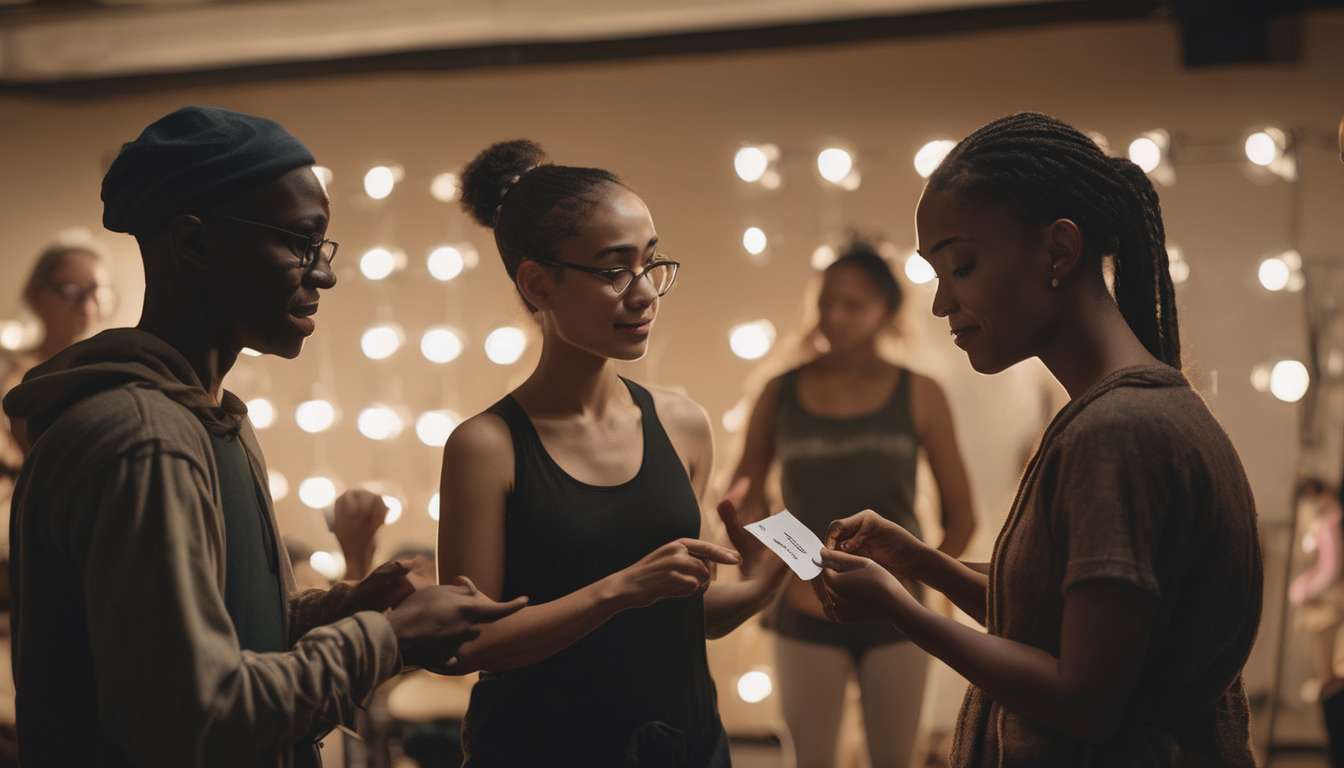
Networks determine more than our audition outcomes; they shape the trajectories of our lives once we step offstage.
We believe that the professional connections we cultivate as dancers serve as lifelines into teaching, choreography, production, arts administration, therapy, and entrepreneurship—pathways that extend the value of our training beyond curtain calls.
By reframing relationships as reciprocal resources rather than mere résumé entries, we unlock opportunities for skill translation, mentorship, and collaborative ventures that honor our embodied knowledge.
Our collective experiences show that a single encounter with a director, educator, or peer can pivot a career toward sustainable, fulfilling work outside live performance.
This article examines how intentional networking practices, community building, and strategic visibility sustain our livelihoods, preserve artistic identity, and expand the influence of dance across sectors.
We offer practical strategies and real-world examples to help us navigate transitions with agency, resilience, and creative momentum.
Networking as Career Insurance
We build and maintain networks as a form of career insurance.
We reach out to colleagues, teachers, and past collaborators knowing relationships act as practical safety nets during career transitions. By keeping connections warm, we create mentorship networks that share leads, give candid feedback, and open doors into teaching, choreography, arts administration, or wellness fields.
We treat belonging as reciprocal resource exchange and celebration.
We spotlight transferable skills — discipline, collaboration, communication — so everyone sees how stage experience maps to new roles. Recognizing pivots and sharing resources helps belonging grow.
We create regular structures to sustain momentum and morale.
- Schedule regular check-ins.
- Offer portfolio reviews.
- Host skill-swaps.
This steady, reciprocal approach reduces isolation and makes transitions feel like shared journeys rather than solitary risks.
We invest in networked care to turn uncertainty into coordinated possibility.
When we coordinate support intentionally, no one navigates change entirely alone.
Translating Stage Skills
We translate stage-honed strengths into language employers, schools, and clients recognize.
We’ll convert discipline, spatial awareness, timing, and communication into clear examples and outcomes.
- Discipline → project completion rates, punctuality, training consistency.
- Spatial awareness → venue layout planning, stage-to-audience flow, set logistics.
- Timing → deadline reliability, pacing in production schedules, synchronization across teams.
- Communication → rehearsal direction, cross-functional coordination, feedback loops.
We map specific dance situations to workplace concepts.
We describe concrete situations so achievements don’t read as vague praise.
- Leading rehearsals → project management: task delegation, milestone tracking, and final deliverables.
- Spatial planning → venue logistics: safety layouts, load-in/load-out sequencing, capacity planning.
- Timing → deadline reliability: on-time shows, cue adherence, tempo management for multi-team events.
- Ensemble communication → team collaboration: conflict resolution, shared decision-making, and constructive critique.
We frame transferable skills to invite interest, not judgment.
Language is inclusive and sector-relevant so hiring managers feel invited to explore fit.
- Show how dance experience maps to education, production, design, therapy, and administration.
- Use role-focused phrasing (e.g., “curriculum design,” “stage operations,” “client-centered therapeutic techniques,” “program administration”).
We encourage tailored résumés, portfolios, and measurable storytelling.
Create documents that highlight results, short case studies, and concise role descriptions.
- Quantify outcomes (attendance increases, reduced setup times, retention rates).
- Include 1–3 short case studies showing problem → action → measurable result.
- Use role bullets with concise achievements, not duties.
We recommend mentorship and community feedback.
Tap peers and mentors who understand dance culture to refine language and presentation.
- Solicit feedback on clarity, tone, and sector-specific relevancy.
- Practice translating stories in mock interviews or résumé reviews.
Outcome: reduce transition friction and build confidence.
By naming concrete skills, offering measurable examples, and using community support, career transitions become tangible and less intimidating — enabling movement into meaningful, related work with clarity and confidence.
Mentorship and Apprenticeships
Mentorship + Apprenticeships
We’ll pair emerging dancers with experienced mentors and hands‑on apprenticeships that build practical industry know‑how, expand professional networks, and create clear pathways to paid roles.
- We create tight mentorship networks where trusted guides share concrete steps for career transitions.
- Mentors help members see how rehearsal discipline, choreography intuition, and production awareness become marketable assets.
- Apprenticeships are structured around real tasks—programming, stage management, teaching, and community engagement—so mentees gain transferable skills employers value.
Cohort Culture & Support
We foster an inclusive cohort culture where mentors check in regularly, peers reflect together, and successes are celebrated publicly to reinforce belonging.
- Regular mentor check‑ins and peer reflection sessions.
- Public celebration of milestones to strengthen community and belonging.
Goals, Feedback, and Career Preparation
We set measurable goals, timelines, and feedback loops so every participant tracks progress toward paid opportunities.
- Clear benchmarks and timelines for career transitions.
- Ongoing feedback loops to adjust learning and placement strategies.
- Portfolio sessions and mock interviews tailored to nonperformance roles to build confidence when applying skills in new sectors.
Principles
Reciprocity and clear benchmarks make career transitions less daunting and more communal, proving that stepping beyond live performance is a shared, supported journey.
Building Cross‑Sector Partnerships
We’ll build strategic partnerships across arts, education, tech, and nonprofit sectors to create new roles, funding streams, and pathways that put dancers at the center of interdisciplinary projects.
We identify mutual goals, map assets, and design pilot programs that honor our collective expertise and make career transitions feel supported, not risky.
By co-creating residencies with schools and labs, we open tangible pathways where choreography informs curriculum and user experience, and where dancers apply transferable skills like communication, adaptability, and embodiment to nonperformance roles.
We cultivate mentorship networks that include:
- industry mentors
- peer cohorts
- partner organizations
so everyone has access to guidance, referrals, and shared resources.
We set clear metrics for success—job placements, skill certificates, and funded collaborations—so partners see value and participants see progress.
We commit to inclusive governance, shared funding models, and reciprocal learning to ensure dancers from diverse backgrounds belong, contribute, and lead in cross-sector initiatives that expand what a dance career can be.
Visibility Without Performing
We’ll create multiple nonperforming roles—curators, educators, producers, consultants, and content creators—that let dancers build professional visibility, income, and influence without stepping onstage.
We’ll map how each role draws on transferable skills like choreography design, project management, communication, and audience empathy, making career transitions feel intentional rather than accidental.
We’ll highlight mentorship networks that connect emerging and mid-career artists with peers and industry allies who can endorse work, open doors, and share practical strategies for:
- pitching proposals
- writing bios
- managing freelance schedules
We’ll emphasize clear ways to document accomplishments so they signal expertise to funders, venues, and collaborators. Examples include:
- case studies
- portfolios
- teaching syllabi
- short videos
We’ll make room for shared authorship so members feel seen through collective offerings such as:
- collective blogs
- panel series
- co-branded workshopsThese formats amplify individual names through group visibility.
We’ll set simple metrics for visibility beyond followers—measures like:
- referrals
- invitations
- paid engagements—and build routines for sustaining presence while honoring rest.
We’ll support each other through staged goals, reciprocal promotion, and accessible resources that welcome everyone into new professional identities and make transitions manageable and equitable.
Collaborative Project Development
We’ll design collaborative projects that let dancers pool skills, share risks, and create visible, sustainable work together.
We’ll map collective goals, match complementary talents, and celebrate each contribution so everyone feels seen and valued.
By centering mentorship networks within project teams, we ensure less-experienced members learn directly from peers and elders while everyone refines transferable skills like project management, choreography for camera, teaching, and community engagement.
We’ll set clear roles, timelines, and decision-making practices that keep projects moving without leaving anyone behind.
Collaborative pilots become low-stakes labs for career transitions, letting us test new pathways—teaching, curation, production—while maintaining artistic identity.
We’ll document processes and outcomes so that successes and lessons feed back into the network, strengthening trust and lowering barriers for future collaborations.
Together, we’ll build a repertoire of shared work and reputational capital that supports sustainable careers beyond live performance, honoring our collective expertise and making space for varied, resilient futures.
Financial and Business Literacy
Goal: Build practical financial and business skills so dancers can make informed decisions and sustain independent artistic work.
Core skills to teach:
- Budgeting
- Contracts
- Pricing
- Bookkeeping
- Basic taxes
Approach:
We’ll lean on mentorship networks to demystify finances. Seasoned peers will share templates, negotiation language, and realistic project budgets to make financial processes concrete and repeatable.
Translate artistic experience into marketable skills:
- Time management
- Client communication
- Project planning
Outcome mapping:
We’ll map those transferable skills to real income opportunities such as:
- Freelance rates.
- Grant applications.
- Consultancy or teaching offers.
Workshops and clinics:
We’ll host focused workshops and peer-led clinics that create safe learning circles so no one feels isolated when facing tax forms or contract clauses.
Practical exercises included:
- Reading and interpreting simple contracts.
- Setting clear service scopes and deliverables.
- Creating contingency plans for irregular income.
Shared practices for collaborators:
- Joint bookkeeping habits (regular reconciliations).
- Accessible cloud records for trust and transparency.
Culture and mentorship:
We’ll normalize financial conversations and pair newcomers with mentors to support smoother career transitions and stronger, sustainable practices that keep our community resilient and connected.
Sustaining Artistic Identity
To sustain our artistic identity, intentionally prioritize creative values, regular reflection, and concrete practices that keep your work distinct as markets and roles change. Claim rituals—daily improvisation, archival journaling, collaborative labs—that anchor aesthetic choices and remind you why you create.
Map what travels with you during career transitions: identify motifs, movement vocabularies, and ethical commitments that maintain recognizability across contexts.
Lean on mentorship networks to test adaptations, solicit honest feedback, and find anchors in peers who’ve preserved artistry while shifting roles.
Translate performance instincts into transferable forms such as teaching curricula, choreography briefs, and community projects; treat these skills as both currency and identity markers.
Set boundaries around commercial demands by negotiating projects that honor core values and saying no when offers dilute your voice.
Sustain belonging and continuity through sharing and mentorship by:
- Co-curating shows
- Sharing processes
- Mentoring emerging artists
Together, steward an artistic identity that’s resilient, legible, and generative across evolving careers.
How do I navigate visa, immigration, or work-permit issues when seeking professional network opportunities abroad?
Goal: Navigate visa, immigration, or work-permit issues when seeking networking opportunities abroad.
Research country-specific rules.
- Consult official government immigration websites and embassy/consulate pages for the most current requirements.
- Check visa categories relevant to your activity (business, short-term work, training, conference, volunteer).
Consult peers and alumni.
- Connect with colleagues, alumni, or professionals who’ve previously participated in similar international networking or work activities.
- Ask about real-world timelines, interview questions, entry experiences, and pitfalls to avoid.
Seek professional advice when needed.
- Engage an immigration lawyer or accredited consultant for complex cases or when rules are unclear.
- Use paid consultations to review applications, sponsorship letters, or work-permit strategies.
Prepare documentation early.
- Gather passports, CVs, invitation or organizational letters, proof of funds, travel itinerary, and any required medical or police-clearance documents well before deadlines.
- Translate and notarize documents if the destination country requires certified translations.
Use organizational letters and sponsor contacts to strengthen applications.
- Obtain formal invitation letters, sponsorship statements, or employer support letters that clearly state purpose, duration, and financial responsibility.
- Ensure these letters include contact details and official letterhead where applicable.
Stay flexible with timelines.
- Anticipate delays in processing, appointment availability, or additional requested evidence.
- Build buffer time into travel and participation plans.
Support each other by sharing resources.
- Share country-specific checklists, embassy links, sample invitation/sponsor letters, and timelines within your network.
- Exchange tips, encouragement, and updates on changing rules to reduce duplication of effort and stress.
What steps can I take to manage mental health and burnout specifically when shifting from a performance schedule to networking and administrative roles?
When shifting from performance to networking and admin roles, set routines that balance work and rest.
Schedule creative practice to stay connected to your art, and ask for flexible deadlines when possible.
Build peer check-ins, seek mentorship and therapy, and create small rituals between tasks to reset.
Celebrate progress, delegate tasks, and say no to preserve energy, so you feel seen, supported, and sustainable.
How do I protect my intellectual property (choreography, teaching methods, creative concepts) when collaborating across sectors or with new organizations?
We’re asking how to protect choreography, teaching methods, and creative ideas when collaborating across sectors.
Document creations, date and register where possible, and use clear contracts specifying ownership, licensing, and credit.
Agree on usage limits and royalties, keep records of rehearsals and drafts, and consider non-disclosure agreements for sensitive concepts.
Involve trusted legal counsel, communicate boundaries openly, and build partnerships that respect our collective creative contributions.
Conclusion
You’ve seen how networks act as career insurance, letting you translate stage skills into new roles and find mentors or apprenticeships that speed transitions.
By building cross‑sector partnerships and developing collaborative projects, you’ll stay visible without performing while strengthening financial and business literacy.
These practices help you sustain your artistic identity as your career evolves, so you’re ready for opportunities beyond live performance and confident directing your professional path forward.