
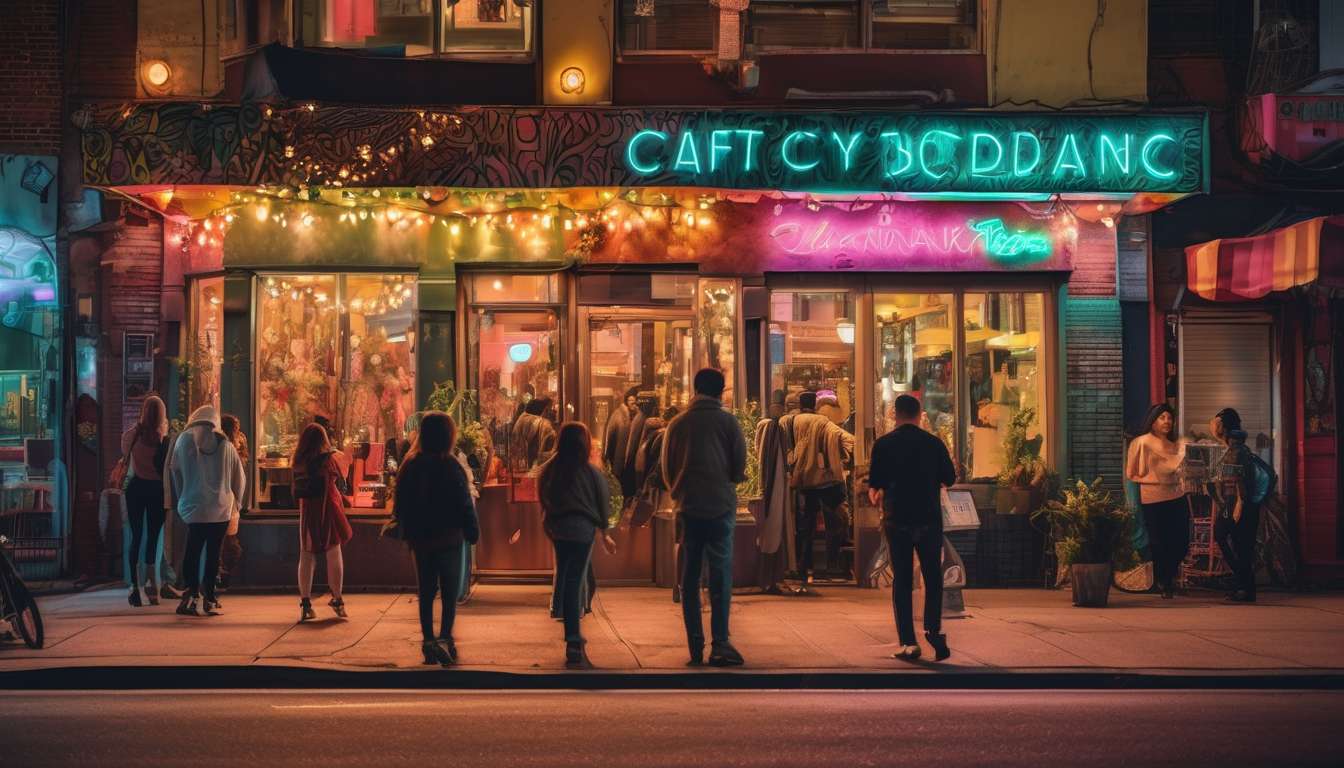
From recent shifts in zoning laws and pandemic recovery funds to rising municipal interest in diversified tax bases, we are witnessing a tangible trend: regulated exotic dance businesses are becoming integral contributors to local economies.
As community leaders reassess which enterprises deserve support, properly zoned clubs provide:
- Stable employment
- Predictable tax revenue
- Increased foot traffic that benefits adjacent small businesses
We have observed cities embracing licensing frameworks that prioritize safety and transparency, which:
- Reduce illicit activity
- Enable owners to invest in property improvements
- Support workforce training
Together, regulators, entrepreneurs, and neighborhood stakeholders are crafting policies that balance community standards with economic opportunity.
Thoughtful regulation transforms a traditionally marginalized industry into a visible, taxable part of urban commerce.
By engaging openly with residents and enforcing consistent standards, municipalities are turning a once-controversial sector into a driver of local revitalization and fiscal resilience.
Economic Impact Overview
We’ll examine how regulated exotic dance businesses contribute to local economies through job creation, tax revenue, and related spending.
Regulated nightlife functions as part of a broader urban ecosystem.
- It supports small suppliers, security services, and other entertainment venues.
- These linkages increase local demand for goods and services, multiplying economic impact.
With clear rules and oversight, these businesses generate predictable local tax revenue.
- Tax receipts can fund public services such as parks, transit, and safety programs.
- Predictability helps municipal budgeting and long-term planning.
Responsible operation aligns with community revitalization efforts.
- Regulated venues can help turn underused corridors into active, safer areas that attract residents and visitors.
- Activation of commercial corridors benefits nearby retailers, restaurants, and property values.
Normalizing oversight and partnerships builds trust and shared benefit.
- Engagement with neighborhood groups, transparent licensing, and consistent enforcement foster mutual accountability.
- Collaborative relationships reduce conflict and improve community outcomes.
Transparency and protections are essential to address concerns.
- Licensing, clear zoning that respects residential life, and enforcement of fair labor practices help mitigate negative impacts.
- Public reporting and accessible complaint processes increase confidence in regulation.
In short: regulated exotic dance businesses can be integrated thoughtfully to boost municipal finances and neighborhood vibrancy.
- When governed transparently and in partnership with communities, they can foster safer, more inclusive commercial districts that benefit workers, patrons, and neighbors alike.
Job Creation Benefits
We create a range of jobs—from performers and managers to security, bartenders, and maintenance staff—that provide income and career opportunities within the hospitality and entertainment sectors.
We hire locally, mentor new staff, and build teams that reflect our neighborhoods, so people feel welcomed and see clear pathways to stable work.
In a regulated nightlife environment, these positions come with standards, training, and predictable schedules that help workers plan and belong.
We collaborate with nearby businesses on staffing needs, creating seasonal and permanent roles that keep earnings circulating nearby.
Our payroll supports everyday spending at shops, transit, and services, reinforcing community ties and contributing to local tax revenue without getting into detailed fiscal projections.
By offering varied roles and advancement routes, we reduce employment barriers and support people seeking purposeful work.
We foster inclusive workplace cultures, prioritize safety and fair pay, and participate in community revitalization efforts that turn once-neglected blocks into active, shared spaces where everyone can feel part of the local economy.
Tax Revenue Growth
We generate steady tax revenue through licensing, payroll, sales, and hospitality-related taxes that fund public services and infrastructure.
Regulated nightlife is a predictable source of local tax revenue that supports schools, parks, and safety services without relying on uncertain funding streams.
By embracing clear rules and transparent reporting, venues contribute meaningful sums from:
- ticketing
- tip-reporting systems
- ancillary spending on food, drink, and lodging
We count on these revenues to finance community revitalization projects — from street lighting to business improvement districts — that make neighborhoods safer and more inviting for everyone.
Working together, business owners, workers, and residents share responsibility for accurate reporting and fair taxation, creating a sense of mutual investment.
Steady receipts reduce pressure on homeowners and small businesses to subsidize services.
Measurable tax flows let us plan long-term improvements, demonstrate return on regulatory choices, and reinvest in programs that benefit the whole community.
Zoning and Licensing Effects
We’ll show how zoning rules and licensing practices shape where clubs can operate, the safety and labor standards they must meet, and the economic effects on surrounding neighborhoods.
We’re intentional about how regulated nightlife is woven into city plans so that venues sit in appropriate commercial corridors, limit conflicts with residences, and support predictable hours.
By requiring licenses, municipalities set baseline standards for worker protections, sanitation, and lawful operations, which helps normalize clubs as part of our shared local economy.
We recognize that clear, fair licensing reduces informal, risky practices and channels business into compliant establishments that pay fees and contribute to local tax revenue.
That predictable income helps fund services we all rely on and can be reinvested into neighborhood improvements.
When zoning and licensing are designed with inclusion and transparency, clubs can become partners in community revitalization by:
- Bringing jobs.
- Generating steady foot traffic.
- Enhancing safety and legitimacy.
- Making neighborhoods more welcoming for everyone.
Public Safety Improvements
We’ll prioritize targeted safety measures—like improved lighting, coordinated policing, and clear emergency protocols—to reduce risks for workers, patrons, and neighbors.
We’ll work with venue operators to ensure exits are visible, staff are trained in de-escalation, and surveillance is used responsibly to protect privacy while deterring crime.
We’ll fund these upgrades partly through local tax revenue collected from licensed establishments, which keeps the burden off residents and ties safety improvements to regulated nightlife standards.
We’ll create community advisory boards that include performers, residents, and public safety officials so everyone feels represented and accountable; that shared voice strengthens trust and social cohesion.
We’ll standardize reporting mechanisms for incidents and follow up transparently so people see results.
By treating safety as a collaborative, practical priority, we’ll reduce harm, foster inclusivity, and support community revitalization efforts that make neighborhoods safer and more welcoming for everyone.
Small Business Spillovers
We’ll support pathways that help exotic dance venues boost surrounding small businesses—like cafes, retail, and services—so economic benefits spread throughout the neighborhood.
We recognize that when regulated nightlife operates responsibly, it creates predictable foot traffic that nearby shops can rely on.
- We’ll collaborate with venue owners, small business associations, and local authorities to align hours, shared promotions, and safety measures so customers feel welcome and stay longer.
We know belonging matters, so we’ll encourage community-focused events and cross-promotions that knit venues and neighboring merchants together.
- That collective approach strengthens local tax revenue streams without sacrificing neighborhood character.
- We’ll also track outcomes—sales uplift, employment, and tax receipts—to refine policies that support entrepreneurs from diverse backgrounds.
By treating regulated nightlife as part of a wider ecosystem, we’ll help distribute economic gains, foster inclusive entrepreneurship, and reinforce community revitalization efforts that benefit residents and business owners alike.
Property and Neighborhood Renewal
Priority: renew vacant and underused properties near dance venues so they become safe, well-maintained spaces that support residents and small businesses.
Actions:
- Convert storefronts into mixed-use units.
- Repair facades.
- Improve lighting and sidewalks.
Goal: Create welcoming, accessible streets so everyone feels comfortable coming and going at all hours.
Strategy: tie property renewal to regulated nightlife to create predictable operating patterns.
Benefits:
- Encourages investment.
- Reduces blight.
- Minimizes displacement of neighbors.
Finance: reinvest a share of local tax revenue from licensed venues into targeted grants and low-interest loans for building upgrades.
Purpose: Help longtime owners and new entrepreneurs alike.
Expected outcomes:
- Foster steady foot traffic.
- Increase occupancy.
- Raise property values in ways that benefit the whole neighborhood.
Policy coordination: align zoning adjustments and clear standards so improvements are durable and equitable.
Community principle: Cultivate thoughtful revitalization that respects local character, supports livelihoods, and strengthens belonging — making streets safer and more vibrant for everyone.
Community Engagement Strategies
Engage stakeholders in ongoing conversations and decision-making.
We’ll engage neighbors, business owners, performers, and city agencies in ongoing conversations and decision-making so policies reflect shared priorities and address real concerns.
Host regular forums and listening sessions.
We’ll host regular forums and listening sessions where everyone can contribute practical ideas about safety, hours, and neighborhood impacts.
Set clear feedback channels.
We’ll set clear feedback channels — surveys, a community liaison, and quarterly reports — so voices matter between meetings.
Partner with clubs and businesses to promote safe, compliant operations.
We’ll partner with clubs to offer training, promote worker safety, and align operations with zoning that supports regulated nightlife without pushing out residents.
Share transparent budgets and track local revenue.
We’ll track local tax revenue and share transparent budgets showing how funds support street lighting, sanitation, and youth programs that knit the neighborhood together.
Include performers in planning and acknowledge their role.
We’ll invite performers into planning tables, recognizing their expertise and role in community revitalization.
Measure outcomes and report progress.
We’ll measure outcomes by reduced complaints, improved foot traffic for nearby shops, and inclusive public spaces.
Adopt a problem-solving mindset and follow through.
We’ll adopt a problem-solving mindset, act on realistic suggestions, and report back regularly so everyone feels seen, heard, and invested in the neighborhood’s future.
How do regulated exotic dance businesses affect rates of human trafficking or exploitation in the area?
Question: How do regulated exotic dance businesses affect trafficking and exploitation rates?
Answer: Research and practice show that effective regulation and oversight tend to reduce trafficking and exploitation, because they make abuses easier to detect and create clearer pathways for reporting and intervention.
Key points:
-
Strong regulatory frameworks that include licensing, clear operating standards, and mandatory reporting requirements help set expectations and boundaries for behavior.
-
Consistent inspections and enforcement are critical; when rules are enforced reliably, venues are less able to operate clandestinely or to hide abusive practices.
-
Worker protections such as safe workplace policies, access to health and legal services, and the right to organize empower workers to report exploitation and resist coercion.
-
Community partnerships between venues, service providers, and law enforcement build trust and create coordinated responses to suspicious activity.
Risks when regulation is weak or poorly enforced:
-
Clandestine venues and lax oversight can increase vulnerability to trafficking by providing spaces where exploitation goes unseen.
-
Inconsistent enforcement undermines deterrence and can normalize abusive practices.
Practical measures to reduce exploitation:
- Support survivors by funding and connecting them with trauma-informed services, shelter, and legal aid.
- Train staff and law enforcement on identifying signs of trafficking, victim-centered response, and cultural competence.
- Maintain open, confidential reporting channels so workers and patrons can safely raise concerns and get rapid assistance.
Bottom line: Well-designed and consistently enforced regulation, combined with worker protections and collaborative community responses, tends to lower trafficking and exploitation risk; the opposite conditions tend to increase risk.
What protections are in place for performers’ health, safety, and rights, including preventing harassment or wage theft?
Protections for performers’ health, safety, and rights
Licensing and workplace safety rules. Establish clear licensing requirements and enforce workplace safety regulations that cover venue standards, safe equipment, adequate lighting and ventilation, and emergency procedures. These rules should be regularly inspected and updated.
Clear tipping and payment policies. Require transparent payment terms, including contract clarity on wages, tipping practices, tip pooling, and timely payment to prevent wage theft. Provide accessible information to performers about their payment rights.
Access to health services and counseling. Ensure performers have access to medical services, sexual health care, mental health counseling, and substance-use support. Provide on-site or referral services and confidential care pathways.
Anti-harassment training and confidential reporting. Mandate regular anti-harassment and bystander-intervention training for staff and management. Maintain confidential, multiple reporting channels (hotline, online form, third‑party reporting) with protections against retaliation.
Labor inspections and legal aid. Conduct routine labor inspections focused on pay, hours, and working conditions. Offer legal aid and assistance for wage claims and other labor disputes.
Support for unions, collectives, and NGOs. Promote and protect the rights to organize by supporting unions or worker collectives. Partner with NGOs to provide training, advocacy, and resources that foster safe, respectful work environments for everyone.
Confidentiality and non-retaliation protections. Implement strong confidentiality policies and explicit non-retaliation measures so performers can report issues without fear of losing work or facing harassment.
Ongoing monitoring and community engagement. Regularly review policies with performer input, track complaint resolution outcomes, and engage the performer community in policy design and updates to ensure protections remain effective and responsive.
How do these businesses influence local crime statistics beyond what standard public safety reports show (e.g., short-term spikes vs. long-term trends)?
Observation: We see complex patterns: short-term spikes in disorderly incidents often occur around events or venue openings, while long-term crime rates frequently stabilize or decline as businesses formalize operations and cooperate with police.
Support and policy positions:
- Transparency, community policing, and data sharing — we support these measures to mitigate harm.
- Consistent enforcement, improved lighting, and worker protections — we’ll advocate for these because they reduce risks and promote safer public spaces.
Rationale: When businesses, police, and communities work together, neighborhoods become safer and residents feel respected and included.
Conclusion
You’ve seen how regulated exotic dance businesses can boost your local economy by creating jobs, increasing tax revenue, and encouraging small business growth.
When zoning and licensing are handled thoughtfully, public safety improves and neighborhoods can renew rather than decline.
With sensible regulation and community engagement, these venues become accountable neighbors that contribute to property values and local services.
Embracing balanced oversight lets you capture benefits while protecting community standards.