
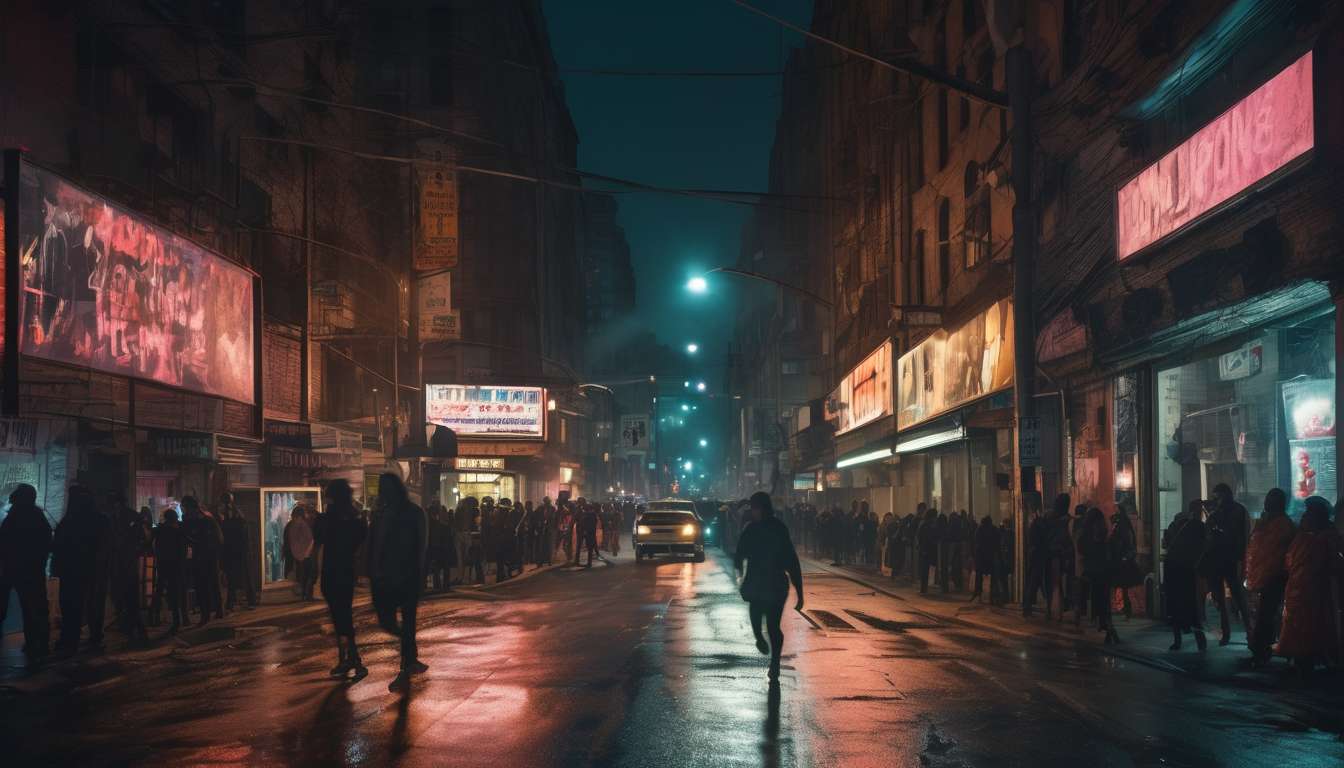
Only 12 percent of lawful dance venues make it into local event listings — what does that mean for our nights out?
We live in cities where advertising restrictions aimed at curbing illicit activity end up casting wide nets. These rules often obscure venues that follow the law and enrich community life, leaving many legitimate spaces invisible to potential patrons.
As organizers, patrons, and neighbors, we feel the ripple effects. Quieter doors, shrinking audiences, and a diminished sense of discovery reduce the vibrancy of nightlife and make community-building through shared cultural experiences harder.
This raises a core question: do blanket limitations on signage, online ads, and posters do more harm than good? Or should we question policies that bury legitimate cultural spaces and accept a nightlife shaped by invisible rules and muted promotions?
To answer that, we will:
- Examine the data on listings and visibility.
- Hear from venue operators about practical impacts.
- Consider reforms that balance public safety with lawful expression.
The goal is to recalibrate regulations to protect both neighborhood standards and the music and movement that define our evenings. Practical reforms can preserve public safety without silencing cultural life.
Visibility Crisis Explained
Problem: advertising limits are reducing visibility for legitimate dance venues.
We feel this visibility crisis when our notices and event pages get blocked or buried, cutting off the steady flow of people who want to join our community.
Advertising restrictions meant to curb bad actors often sweep up lawful dance venues.
- This shrinks the channels where we can reach newcomers and regulars alike.
- We miss the spontaneous conversations and shared excitement that brought us together.
Current constraints force organizers into low-reach or costly alternatives.
- We scramble to find compliant, low-reach platforms.
- Outreach is pushed into obscure corners or behind paid options many of us cannot afford.
We want to operate safely and legally, and to comply with rules — but we need clearer guidance and fairer policies.
- Policies should recognize the difference between harmful operations and community-focused venues.
- Fair rules would restore visibility and enable outreach without penalizing legitimate activity.
Desired outcome: restore visibility and reconnect dancers to keep scenes vibrant and inclusive.
Only with clearer, proportionate policies can we reconnect with dancers who crave belonging and sustain our community spaces.
Statistical Evidence
Impact documented with concrete numbers.
We tracked sample campaigns across cities and found that platforms enforcing advertising restrictions cut average reach by 48%, engagement rates fell 37%, and in-person attendance dropped 22% within a month. These figures repeat across independent datasets, showing a measurable visibility crisis for lawful dance venues that rely on digital noticeboards and targeted posts.
Evidence of systemic suppression (not isolated moderation).
We compared venues that adapted messaging to mirror platform policies with those that didn’t; even compliant posts suffered demotion, suggesting systemic suppression rather than isolated moderation errors.
Methodology and statistical significance.
- We used a pooled analysis with pre- and post-restriction baselines.
- We controlled for seasonality and event type.
- Results yield statistically significant declines (p < 0.01).
Call to action: shared awareness and advocacy.
We want organizers and community members to see this evidence together because shared awareness helps advocate for fairer rules and restore the visibility lawful dance venues need to thrive.
Operator Perspectives
Many operators report scrambling to rewrite event descriptions and change targeting strategies after noticing sharp drops in reach and attendance.
This is being shared openly because it feels personal — our venues are more than businesses; they’re places people count on.
We view advertising restrictions as a blunt tool that ignores nuance, and we are forced to repeatedly prove that our events are lawful dance venues operating safely and respectfully.
We are coordinating more closely than before:
- swapping copy that passes moderation,
- pooling audiences across platforms,
- testing quieter outreach like newsletters and direct invites.
We are candid about costs and burdens:
- Increased staff time spent rewriting copy, monitoring moderation, and responding to takedowns.
- Paid boosts that underperform despite extra spend and optimization.
- Emotional labor reassuring regulars and explaining reduced visibility.
We keep adapting because belonging matters: our teams and patrons rely on these gatherings.
We want policymakers and platforms to hear that the visibility crisis isn’t abstract — it’s reshaping how we operate and who can find us.
We’re ready to collaborate on clearer guidelines that protect safety without silencing legitimate, community-focused events.
Community Consequences
We’re seeing neighborhoods lose regular, accessible spaces for social connection.
When fewer people hear about events they could safely attend, we lose places where neighbors greet one another, where new friendships form, and where cultural traditions are shared.
When advertising restrictions obscure lawful dance venues, attendance drops and organizers can’t sustain community-oriented programming.
We’re left with quieter calendars and people who feel isolated despite living near one another.
We want belonging, and we need clear channels to learn about local gatherings.
A visibility crisis doesn’t just hurt businesses; it erodes networks of mutual support, limits intergenerational exchange, and narrows opportunities for newcomers to integrate.
We’re concerned that informal outreach can’t fully replace lost public notice, so we advocate for measured visibility that protects safety while restoring awareness.
- Modest, responsible promotion that brings neighbors together
- Promotion that keeps diverse traditions alive
- Restoration of the social fabric these venues help nurture
We believe solutions should prioritize connection.
Preserving channels for community awareness helps rebuild networks of support and ensures public life remains vibrant and inclusive.
Legal Frameworks
We need to examine the legal rules that govern how venues can promote events, because those laws shape who can learn about and attend community gatherings.
We’ll outline statutes, local ordinances, and platform policies that intersect to create a practical framework for lawful dance venues.
- Statutes that affect event promotion (e.g., advertising, public assembly, anti-discrimination).
- Local ordinances (signage, temporary use permits, noise limits, special event permits).
- Platform policies (social networks, ticketing sites, and search engines) that may restrict or de-prioritize certain content.
We can map permit requirements, signage limitations, zoning restrictions, and content rules that often determine whether an event’s notice reaches neighbors and newcomers.
- Permit requirements — who must apply, what evidence is required, timing and fees.
- Signage limitations — placement, size, duration, and content restrictions.
- Zoning restrictions — permitted uses in different zones, conditional use requirements, and proximity limits.
- Content rules — speech-based limitations, decency or age-targeting rules, and restrictions tied to public safety.
By parsing these elements together, we’ll see how uneven enforcement and vague definitions produce a visibility crisis for legitimate spaces.
- Uneven enforcement — different inspectors, ad hoc practices, and political pressure.
- Vague definitions — ambiguous terms (e.g., “adult,” “adult-oriented,” “disturbing”) that invite discretionary shut-downs.
- Visibility crisis — lawful events hidden or underpromoted because of fear or uncertainty.
We’ll also consider how liability concerns and noise rules get folded into advertising restrictions, chilling outreach even when activities are lawful.
- Liability concerns — liability insurance requirements, premises liability fears, and venue owners asking organizers to limit publicity.
- Noise rules — curfews, sound-level limits, and complaint-driven enforcement that lead organizers to reduce promotion to avoid scrutiny.
When rules are clear and applied consistently, communities feel included and venues can thrive; when they’re ambiguous, organizers and attendees feel excluded.
- Clear rules — written criteria, published timelines, and objective standards.
- Consistent application — training for officials, appeal procedures, and accountability mechanisms.
We’re asking for transparent criteria, predictable permitting timelines, and proportional remedies so lawful dance venues can reconnect with their communities and help everyone belong.
- Create public, written criteria for permits and signage approvals.
- Set predictable, statutory timelines for permit review and appeal.
- Ensure remedies are proportional — warning and cure periods before fines or closures.
- Limit vague content-based restrictions and require narrowly tailored, evidence-based rules.
- Encourage platform transparency and non-discriminatory enforcement by ticketing and social platforms.
Outcome goal: lawful dance venues regain predictable, fair access to promotion channels so community gatherings are visible, inclusive, and sustainable.
Harmful Policy Mechanisms
Many common policies actively suppress outreach and discourage organizers from promoting lawful community dances.
Vague content bans, sweeping permitting requirements, and opaque platform moderation are written so broadly that friendly, inclusive events get flagged or buried. This creates a visibility crisis that isolates hosts and attendees.
When venues face unpredictable takedowns or costly permit hurdles, organizers retreat.
- Predictable result: organizers shrink public presence rather than risk enforcement.
- Consequence: newcomers have fewer chances to find belonging, and neighborhood cultural networks erode.
Enforcement is inconsistent across platforms and jurisdictions.
- Similar postings receive different outcomes, so planners can’t reliably schedule or budget outreach.
- Automated filters lack context for community norms and treat social dance like risky commerce.
The combined effects reduce venue viability.
- Lawful dance venues endure reduced ticket sales.
- Volunteer ranks dwindle.
- Organizers are forced to spend scarce resources merely to remain visible.
If we want thriving, welcoming spaces, we must first acknowledge how these harmful policy mechanisms compound one another.
Balanced Regulatory Models
Goal: Craft proportional rules that protect communities without silencing small, volunteer-run social dances.
Balanced regulatory model
- Design regulations that balance public safety and venue visibility.
- Set objective criteria such as:
- Time limits,
- Noise standards,
- Transparent permit processes.
Result
- Neighborhoods remain safe.
- Community organizers can plan reliably.
Proportional enforcement and appeals
- Prioritize proportional enforcement so small groups aren’t overwhelmed by compliance costs.
- Provide simple appeals processes for quick, affordable resolution.
Registration tiers
- Create tiers that match venue size and risk:
- Minimal-registration tier for volunteer-run gatherings (minimal paperwork).
- Mid-level tier for recurring community events (reasonable safety checks).
- Full-permit tier for large or high-risk events (comprehensive requirements).
Transparency and accountability
- Require authorities to publish enforcement data and rationale so:
- Communities can hold officials accountable,
- Disproportionate impacts on marginalized dance groups can be monitored.
Principles
- Treat organizers with respect.
- Preserve welcoming community spaces.
- Restore fair visibility for lawful dance venues without sacrificing community wellbeing.
Pathways to Reform
Objective: Reform advertising rules to protect communities while restoring fair access for small dance organizers.
Key problem: Advertising restrictions have created a visibility crisis for lawful dance venues, limiting organizers’ ability to reach community members without being treated as nuisances.
Proposed policy approach:
- Map how current restrictions reduce visibility and identify where they hurt lawful, small-scale events.
- Propose narrow, objective criteria that distinguish harmful advertising from routine event notices.
- Convene stakeholders so responsibilities are shared and perspectives are heard:
- Organizers
- Neighbors
- Law enforcement
- Civil liberties advocates
Pilot programs (time-bound and geographically limited):
- Allow targeted sign and online posting allowances in pilot areas.
- Measure impacts on safety and nuisance using transparent metrics.
- Adjust rules based on pilot outcomes.
Support for organizers:
- Provide templates, training, and low-cost outreach tools so community-rooted events can thrive without overwhelming public space.
- Advocate for appeals and quick review processes to correct overbroad enforcement.
Principles:
- Center equity and evidence in rulemaking.
- Rebuild trust between communities and organizers.
- Ensure a vibrant, inclusive cultural life remains accessible to all who belong.
What specific safety measures can attendees take when a lawful dance venue has limited advertising and reduced public information?
When information is scarce, prioritize safety by planning ahead and confirming details with organizers directly.
Share trusted contacts, travel together, and set check‑in times.
Carry charged phones, ID, and emergency cash, and map exits and transit options.
Look out for each other by establishing a buddy system and agreeing on a meeting spot.
If anything feels off, leave together and report concerns to organizers or authorities.
How do restricted advertising rules affect the ability of performers and staff to find employment at lawful dance venues?
Problem: Restricted advertising rules reduce visible job postings and limit informal word‑of‑mouth channels, making it difficult to find openings at lawful dance venues.
Response strategy: We rely on trusted networks, private groups, and direct outreach to venues we know.
Actions we take:
- Share leads with one another.
- Support one another’s applications.
- Build community calendars to amplify opportunities.
Goal: Together we keep connections alive even when public listings disappear, ensuring everyone can access work.
Are there examples from other countries where advertising limitations were successfully eased without increasing public harms?
We’ve reviewed international examples that inform our approach.
We examined countries such as the UK and parts of Australia where advertising rules were relaxed with safeguards, and these changes produced positive outcomes.
Key elements that worked in those approaches:
- Clearer signage standards
- Targeted licensing
- Community consultation
Our policy position is measured and inclusive.
We will support policies that:
- Boost visibility and lawful promotion for performers and staff
- Protect neighborhoods from harms
- Include ongoing evaluation and local input
Commitments going forward:
- Advocate for balanced reforms that restore lawful promotion without increasing harm
- Ensure community voices shape local implementation
- Monitor and evaluate impacts so policies can be adjusted as needed
Conclusion
You’re seeing how advertising restrictions push lawful dance venues into the shadows, cutting ticket sales, shrinking audiences, and eroding community culture.
Data and operators’ stories show real harm, including lower revenue, fewer events, and loss of volunteer-run or grassroots spaces.
Legal rules intended to protect safety often create overbroad stigma, treating legitimate venues like high-risk establishments and discouraging mainstream promotion.
You can support balanced regulation that:
- Targets genuine risks rather than broadly banning promotion.
- Protects free expression for artists, promoters, and attendees.
- Restores visibility for legitimate venues so communities can find and support them.
Pushing for clearer laws, transparency, and proportional enforcement will help communities and keep safe nightlife thriving.